


Bespoke Wardrobe Interior Layout Ideas: 7 Smart Designs
Table of Contents
- Why Your Bespoke Wardrobe Interior Layout Matters
- Maximizing Hanging Space and Double-Rail Systems
- Wardrobe Shelving and Hanging Configurations That Work
- Corner Wardrobe Solutions for Awkward Spaces
- Wardrobe Internal Storage Solutions for Every Lifestyle
- How to Organise a Bespoke Wardrobe for Daily Ease
- Ergonomic Reach, Lighting, and Accessibility
- Built-In vs. Freestanding Layouts: Which Suits Your Home
- Frequently Asked Questions
Last Updated: September 1, 2026
Why Your Bespoke Wardrobe Interior Layout Matters
A well-designed bespoke wardrobe interior layout transforms how you dress each morning. The difference between a cluttered rail and an organized system is more than aesthetic, it's about reclaiming time, reducing decision fatigue, and actually wearing the clothes you own. At DoorsDirect, we've worked with homeowners and joiners to understand what separates a functional wardrobe from one that genuinely works.
The layout you choose determines whether your space feels like a luxury dressing room or a storage cupboard. Poor configuration wastes vertical space, hides garments behind others, and makes seasonal rotation a nightmare. A thoughtful bespoke wardrobe interior layout, by contrast, puts everything within reach, visible, and organized by how you actually dress.
This guide covers seven smart design approaches that work across different room sizes, clothing volumes, and lifestyle needs. Whether you're fitting a compact alcove, designing around sloped ceilings, or maximizing a walk-in space, the principles remain consistent: maximize hanging space, layer storage strategically, and build in flexibility for change.
Maximizing Hanging Space and Double-Rail Systems
The single most effective way to increase storage capacity is vertical hanging space. A double-rail system, hanging short items on one rail and longer pieces on another, can nearly double your garment capacity without expanding the wardrobe's footprint.
Short-hang rails typically sit 1.2 metres high and work best for shirts, blazers, and trousers. Long-hang rails extend to 1.8-2.0 metres and accommodate dresses, coats, and full-length skirts. By combining both within the same wardrobe depth, you eliminate wasted space above shorter garments.
The practical benefit is immediate: you see everything at once. Colour coordination becomes easier, duplicate purchases drop, and getting dressed takes minutes instead of rummaging through a single packed rail.
Installation matters here. Rails must be precisely positioned, too close together and hangers jam; too far apart and you waste depth. DoorsDirect's made-to-measure approach ensures rails are positioned exactly where they need to be, with proper spacing for soft-close mechanisms and smooth operation.
For joiners and carpenters working on client projects, double-rail systems also simplify installation. The rails are independent, so you can adjust heights during fitting without rebuilding the entire interior. This flexibility saves time on site and reduces callbacks.
Wardrobe Shelving and Hanging Configurations That Work
Fixed Shelf Stacks vs. Adjustable Options
Fixed shelves are permanent, affordable, and stable. They work well when you've planned your storage needs carefully and don't expect major changes. A typical fixed shelf stack includes three to five shelves, providing space for folded jumpers, bags, and accessories.
Adjustable shelving offers flexibility. You can reposition shelves as your wardrobe evolves, moving a shelf higher to accommodate bulkier winter coats, then lowering it again come spring. The trade-off is slightly more complex installation and marginally higher cost.
For most residential projects, a hybrid approach wins. Fix the top and bottom shelves for stability, then use adjustable brackets for the middle shelves. This gives you flexibility where it matters most without sacrificing the structural integrity of the entire unit.
Combining Long-Hang and Short-Hang Rails
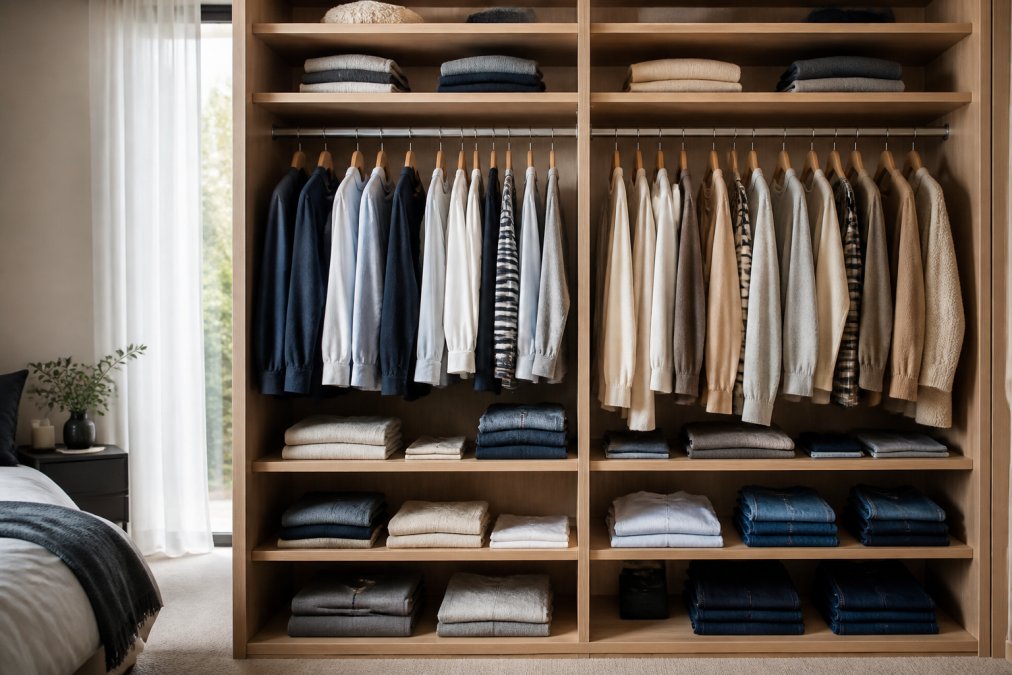
The real power of a bespoke wardrobe interior layout emerges when you combine hanging and shelving strategically. A typical configuration might include:
- Long-hang rail for dresses and coats (1.8-2.0m height)
- Short-hang rail for shirts and trousers (1.2m height)
- Fixed shelves above the short-hang rail for folded knitwear
- Drawer tower or pull-out baskets below for accessories and undergarments
This layered approach respects the natural workflow of getting dressed. Outer layers and full-length pieces hang prominently; everyday basics occupy the mid-zone; and smaller items live in drawers where they're protected from dust but still organized.
The vertical space between the short-hang rail and the shelf above becomes prime real estate. Many people miss this opportunity and leave it empty. Instead, use it for a narrow shelf or install an accessory tray system. This is where belts, scarves, and jewellery belong, visible, accessible, and off the main rails.
DoorsDirect's Economy Contract Interior kit includes exactly this configuration: five fixed shelves, three hanging rails, and a footprint that fits openings up to 2.8 metres wide. It's a proven layout that works because it reflects how people actually use their wardrobes.

Corner Wardrobe Solutions for Awkward Spaces
Corner units are notoriously difficult to design. A standard rectangular wardrobe leaves the corner space dead and inaccessible. A bespoke wardrobe interior layout solves this with angled shelving, rotating carousels, or L-shaped configurations.
The angled shelf approach works well for shoes and bags. A shelf cut at 45 degrees to the corner allows you to see items at the back without reaching blindly. Alternatively, a carousel system, shelves that rotate outward, brings items to you rather than forcing you to reach into the depth.
For corner wardrobes with sloped ceilings or alcoves, custom joinery becomes essential. Standard fittings won't work. A made-to-measure interior adapts to the exact angles and dimensions of your space, ensuring no wasted corners and no awkward gaps.
Wardrobe Internal Storage Solutions for Every Lifestyle
Accessory Trays, Tie Racks, and Drawer Dividers
The difference between a wardrobe that feels organized and one that feels chaotic often comes down to how you handle small items. A single shelf holding loose jewellery, scarves, and belts quickly becomes a tangled mess. Dedicated accessory trays and dividers prevent this.
Tie racks, whether pull-out rails or rotating carousel systems, keep neckties visible and untangled. Jewellery trays with compartments prevent chains from knotting. Drawer dividers segment undergarments, socks, and hosiery so everything has a designated home.
These aren't luxuries. They're the difference between knowing what you own and forgetting about items you paid for. A person with 20 visible scarves is more likely to wear them than someone with 30 scarves buried in a heap.
DoorsDirect's interior kits can be customized with these accessories. Soft-close drawer towers, pull-out rails, and modular divider systems integrate seamlessly with your hanging space and shelving.
Seasonal Rotation and Hidden Storage
Not everyone wears the same clothes year-round. Winter coats, summer linen, and formal wear for occasional events all need storage space without cluttering your daily wardrobe.
A practical seasonal rotation strategy uses upper shelves or the back corners of long-hang rails for out-of-season items. Vacuum storage bags compress bulky winter coats to a fraction of their size. Clear plastic boxes let you see contents without opening them.
The key is making rotation easy. If accessing your winter wardrobe requires moving five other things, you won't bother. A dedicated zone, perhaps the top shelf or a separate drawer tower, makes seasonal swaps a two-minute task rather than a full reorganization.
Some homeowners add a second wardrobe or a tall drawer tower specifically for seasonal storage. This keeps your main wardrobe focused on clothes you wear regularly, reducing visual clutter and decision fatigue.
How to Organise a Bespoke Wardrobe for Daily Ease
Organization systems work best when they match your actual behaviour. If you fold jumpers, don't force them onto hangers. If you wear outfits rather than mixing and matching, group coordinated pieces together.
Start by categorizing: tops, bottoms, dresses, outerwear, and accessories. Within each category, organize by colour or frequency of wear. Colour organization is visually satisfying and makes outfit selection faster. Frequency organization, putting everyday basics at eye level and occasional pieces higher or lower, respects your actual usage patterns.
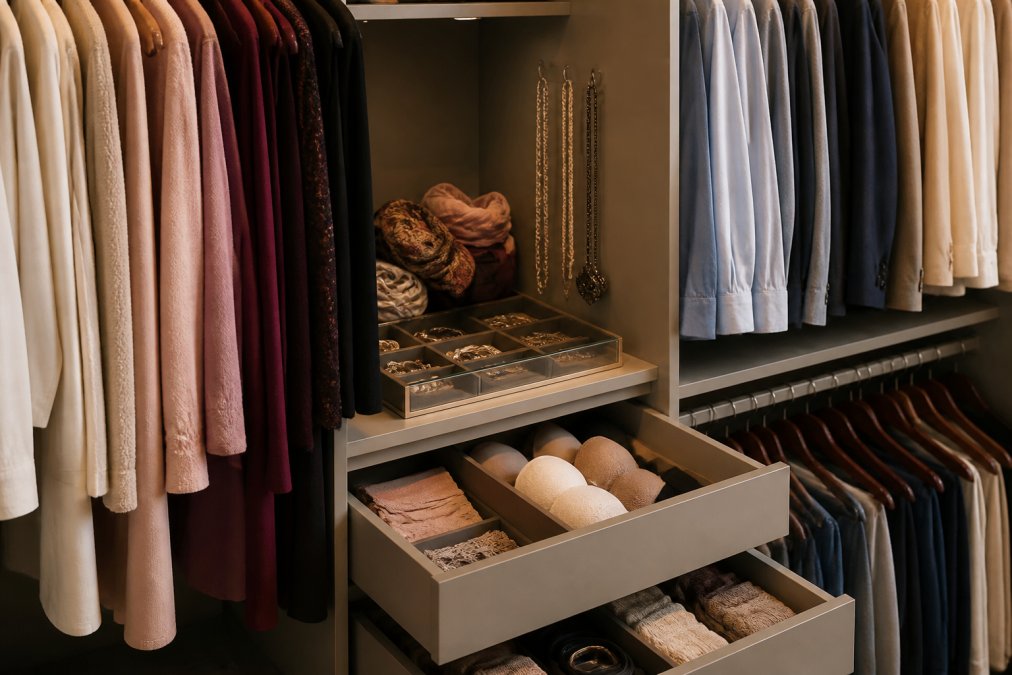
The most overlooked aspect of organization is maintenance. A beautiful system falls apart if you don't return items to their designated spots. Build in a five-minute reset routine, perhaps Sunday evening, where you rehang items, return accessories to their trays, and clear the rail of worn clothes waiting to be washed.
A bespoke wardrobe interior layout supports this discipline. When everything has a clear home, returning items takes seconds. When storage is deep, dark, and disorganized, the temptation to just toss things on top of the rail is irresistible.
Ergonomic Reach, Lighting, and Accessibility
Wardrobe design often ignores ergonomics. A rail mounted too high requires a step stool. Shelves too deep force you to lean in and risk losing items at the back. Poor lighting means you're choosing clothes in shadow.
The ergonomic sweet spot for hanging rails is 1.4-1.7 metres, within comfortable reach without stretching or stooping. Shelves should be no deeper than 50 centimetres; beyond that, items disappear into shadow and become inaccessible.
Lighting transforms a wardrobe from functional to genuinely pleasant. LED strips along the top of the unit, inside the frame, or under shelves illuminate the entire interior without creating shadows. Warm white LEDs (2700K-3000K) show colours accurately without the harsh blue of daylight bulbs.
For people with mobility challenges, accessibility becomes paramount. Lower hanging rails, shallower shelves, and pull-out drawers with smooth soft-close mechanisms reduce strain and effort. A pull-out rail brings items to you rather than requiring you to reach into depth.
These considerations aren't add-ons for a small percentage of users. They're fundamental to a well-designed bespoke wardrobe interior layout. Everyone benefits from good lighting, ergonomic heights, and easy access.
Built-In vs. Freestanding Layouts: Which Suits Your Home
Built-in wardrobes maximize space. They use the full height of the room, the full width of the alcove, and integrate seamlessly with the architecture. They're permanent, which means they add value to the property.
Freestanding wardrobes offer flexibility. You can move them if you redecorate, take them with you if you move house, and install them without structural work. They work well in rental properties or temporary arrangements.
The practical difference comes down to space efficiency. A built-in wardrobe uses every centimetre; a freestanding unit needs clearance around it for doors to open. In a compact bedroom, that difference can be significant.
DoorsDirect serves both markets. The made-to-measure sliding wardrobe doors work with built-in interiors, and the interior kits can be adapted for freestanding frames. This flexibility means you're not locked into one approach; you can design what genuinely suits the space and the client's needs.
| Layout Type | Best For | Space Efficiency | Installation Time | Flexibility |
|---|---|---|---|---|
| Built-in | Permanent homes, maximum capacity | Excellent (full height/width) | 3-5 days | Low (fixed to walls) |
| Freestanding | Rentals, frequent moves | Good (needs clearance) | 1-2 days | High (portable) |
| Hybrid (built-in frame, modular interior) | Custom spaces, future changes | Very good | 2-3 days | Medium (interior reconfigurable) |
A bespoke wardrobe interior layout is an investment in daily life. It saves time getting dressed, reduces decision fatigue, and lets you actually wear the clothes you own. Whether you're designing a compact alcove or a full walk-in space, the principles remain: maximize vertical space, layer storage strategically, and build in flexibility for change.
DoorsDirect's made-to-measure approach ensures your interior fits perfectly, backed by a three-stage quality check and a ten-year guarantee. From measurement through installation, expert guidance is available every step. Order yours today and transform your bedroom storage into a space that genuinely works for how you live.

Frequently Asked Questions
Q: What is the best layout for a bespoke wardrobe interior?
A: The best layout depends on your clothing mix. Most people benefit from combining long-hang space for dresses and coats with short-hang rails for shirts and jackets, plus shelving for folded items and accessories. A typical 2-door wardrobe works well with 60% hanging space and 40% shelving, though this ratio shifts based on your wardrobe. Vertical space optimization matters too: floor-to-ceiling layouts maximize storage in bedrooms with standard ceiling heights, while sloped or awkward spaces need custom joinery to fit properly.
Q: How much space should I allocate for hanging versus shelving in my wardrobe layout?
A: The 60/40 split (hanging to shelving) works for most households, but adjust based on what you own. If you wear mostly dresses, coats, and trousers, aim for 70% hanging. If you prefer folded knitwear and casual wear, shift toward 50/50. A practical approach: measure your existing clothes. Count how many items you hang versus fold, then calculate the percentage. Remember that double-hanging rails (short-hang above long-hang) let you use the same floor space twice, effectively doubling your hanging capacity without sacrificing shelf room.
Q: Can a bespoke wardrobe layout work in a loft or sloped-ceiling room?
A: Yes, but it requires custom design. Sloped ceilings and angled walls mean standard fitted wardrobes won't fit. Bespoke solutions use custom joinery to work around the slope, placing full-height storage on the vertical wall and stepped or angled shelving where the ceiling drops. End panels and dividers are cut to match the angle. This is where made-to-measure interiors shine: companies like DoorsDirect design around your exact measurements, ensuring hanging rails and shelves sit level and usable even when the room itself isn't square.
Q: What are common wardrobe design mistakes to avoid?
A: The biggest mistake is not measuring the usable height and depth before ordering. Many people forget to account for skirting boards, radiators, or sloped ceilings, resulting in interiors that don't fit. Another error is ignoring accessibility: placing frequently worn items at shoulder height and awkward pieces up high saves daily frustration. Poor lighting is often overlooked too, internal LED strips make a huge difference in finding items. Finally, avoid over-shelving; too many shelves with limited hanging space leaves you nowhere for seasonal coats or longer garments, forcing poor organization.
This article was written using GrandRanker
Leave a comment