


Durable Sliding Door Tracks for Daily Use
Table of Contents
- What Makes Sliding Door Tracks Durable for Daily Use
- Track Materials: Aluminium vs Steel for Long-Term Performance
- Understanding Weight Capacity and Load-Bearing Requirements
- Sliding Wardrobe Doors with Soft Close: Benefits and Track Compatibility
- Heavy-Duty Sliding Door Track Kit: Components and Installation
- Sliding Door Maintenance Tips for Lasting Performance
- Troubleshooting Common Track Failures and When to Replace
- Choosing the Right System: Internal vs External Tracks
Last Updated: August 28, 2026
What Makes Sliding Door Tracks Durable for Daily Use
Durable sliding door tracks withstand thousands of open-close cycles whilst maintaining smooth operation. The key to longevity lies in material quality, load-bearing design, and how the track distributes weight across roller bearings to manage friction over time. A well-engineered track spreads load across the entire profile, reducing wear and extending lifespan dramatically.
Most homeowners don't think about track durability until a door starts jamming. What makes a track truly durable is a combination of three factors: the material's resistance to corrosion and deformation, the precision of the roller bearings, and how the system handles thermal expansion. Temperature changes cause materials to expand and contract; a track that accommodates this movement glides smoothly, whilst one that doesn't creates friction and accelerates wear.
Track Materials: Aluminium vs Steel for Long-Term Performance
Aluminium extrusion has become the industry standard for residential sliding door tracks. It resists rust naturally, weighs less than steel, and machines to precise tolerances that reduce friction. Steel tracks require protective coatings to prevent corrosion and are heavier to install.
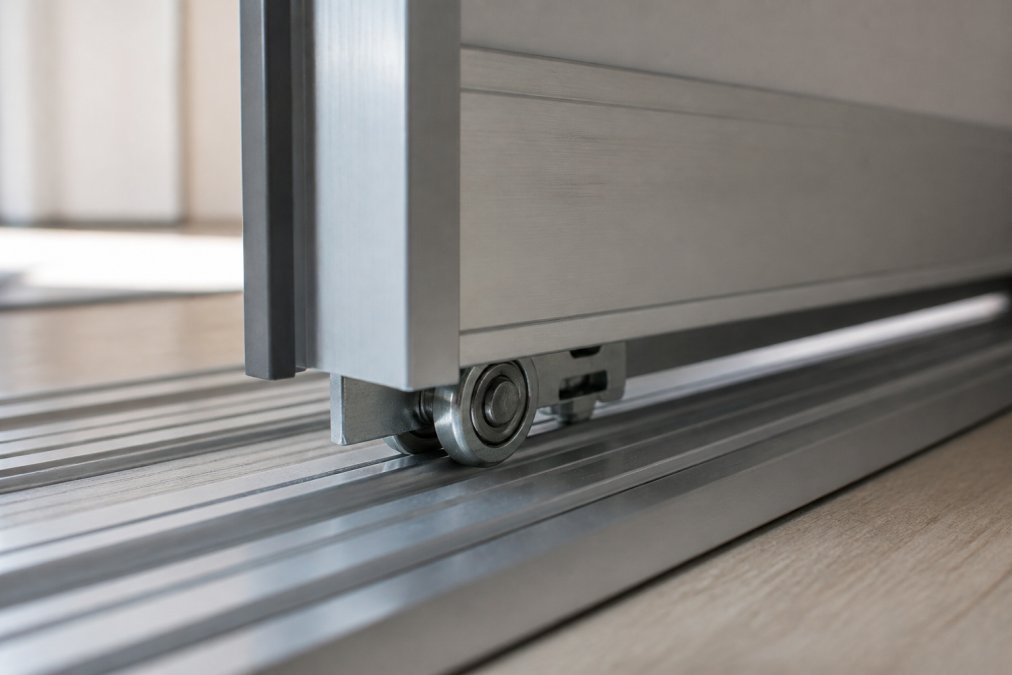
Aluminium's durability advantage is significant in high-moisture environments like bathrooms or kitchens. Steel rusts when the protective coating wears through with daily use. Aluminium oxide forms a natural barrier that self-heals; once scratched, a new protective layer forms automatically, maintaining smooth operation longer even in damp conditions.
Not all aluminium is equal. Anodised aluminium, treated with an electrolytic process that thickens the oxide layer, outlasts untreated aluminium significantly. When selecting a track system, verify whether the aluminium profile is anodised. If it isn't, the track will dull and corrode faster, especially in humid climates.
Steel tracks do have one advantage: raw strength for extremely heavy door panels or commercial applications. However, this is offset by maintenance demands. Steel tracks need regular cleaning and protective coatings reapplied, making them more expensive to own long-term.
For most homes, anodised aluminium extrusion balances durability, low maintenance, and smooth operation. DoorsDirect's Durham and Monaco collections both use premium aluminium profiles with anodised finishes, ensuring they resist corrosion whilst maintaining smooth glide.

Understanding Weight Capacity and Load-Bearing Requirements
Every sliding door track has a maximum load-bearing capacity, the total weight it can support without deflecting, binding, or prematurely wearing the roller bearings. Exceed this capacity and the track flexes under load, creating friction that accelerates wear and eventually causes derailment.
Load-bearing capacity depends on three factors: the track profile's cross-sectional strength, the number and quality of roller bearings, and the spacing between support points. Most residential sliding doors fall into one of three weight categories: a single glazed panel typically weighs 25-40 kg, a pair of glazed panels adds 50-80 kg total, and three or four doors can push 100-150 kg depending on panel thickness and material. Always refer to the manufacturer's specifications for precise load limits.
When selecting a track system, the supplier should confirm the load-bearing capacity in writing. DoorsDirect's made-to-measure sliding wardrobe doors are specified with the exact weight of your custom panels, ensuring the track system is sized correctly from the start.

Sliding Wardrobe Doors with Soft Close: Benefits and Track Compatibility
Soft-close sliding door hardware has become a premium feature in modern wardrobes. Instead of doors slamming shut, soft-close mechanisms gently slow the door as it approaches the closed position, providing refined, quiet operation and protecting fingers from pinch points.
Soft-close systems work by integrating damping cartridges into the track or door frame. These cartridges contain viscous fluid that resists rapid movement, gradually decelerating the door. The durability advantage is significant: soft-close mechanisms reduce impact stress on the track system, extending its lifespan. A door that slams shut creates shock load on the track every time it closes. Over thousands of cycles, this impact stress fatigues the material and loosens fasteners. A soft-close system eliminates this shock, distributing deceleration force evenly across the damping cartridge instead of the track structure.
Not all track systems are compatible with soft-close hardware. The track profile must accommodate the damping cartridge, and the door frame must be designed to integrate the mechanism properly.
DoorsDirect's premium collections, Durham and Monaco, both offer soft-close action as standard on many configurations. The soft-close mechanism is integrated into the top track, ensuring compatibility and reliability.
Heavy-Duty Sliding Door Track Kit: Components and Installation
A complete sliding door track kit comprises several components, each playing a role in durability and smooth operation. The top track is the primary load-bearing component, supporting the weight of door panels and guiding them horizontally. The profile must be rigid enough to prevent deflection under load; any sagging introduces friction and binding.
The bottom track or floor guide provides lateral stability and prevents door panels from swinging outward. It carries less load than the top track but must be precisely aligned to prevent binding.
Roller bearings are the moving parts that allow the door to glide. Ball bearings are standard in residential systems; they're durable and smooth. The bearing quality directly affects smoothness and longevity. Cheap bearings use simple bushings instead of ball bearings; these wear quickly and create friction.
Door runners or suspension hardware attach door panels to the track and must be strong enough to support the full weight of the panel without flexing. Fasteners, gaskets, and end caps complete the kit. Stainless steel fasteners resist corrosion, rubber gaskets seal the track and reduce rattle, and end caps protect the track profile.
Installation precision is critical. The top and bottom tracks must be perfectly parallel and level. Even a 2mm misalignment causes binding and accelerated wear. Professional installers use laser levels and precision shims to achieve this alignment.
DoorsDirect's made-to-measure kits arrive with all components pre-assembled and pre-cut to your exact dimensions. This eliminates on-site trimming and alignment guesswork, reducing installation error and ensuring reliable operation from day one.
Sliding Door Maintenance Tips for Lasting Performance
Proper maintenance is the difference between a track system that lasts a decade and one that fails after three years. The maintenance routine is simple and requires minimal time.
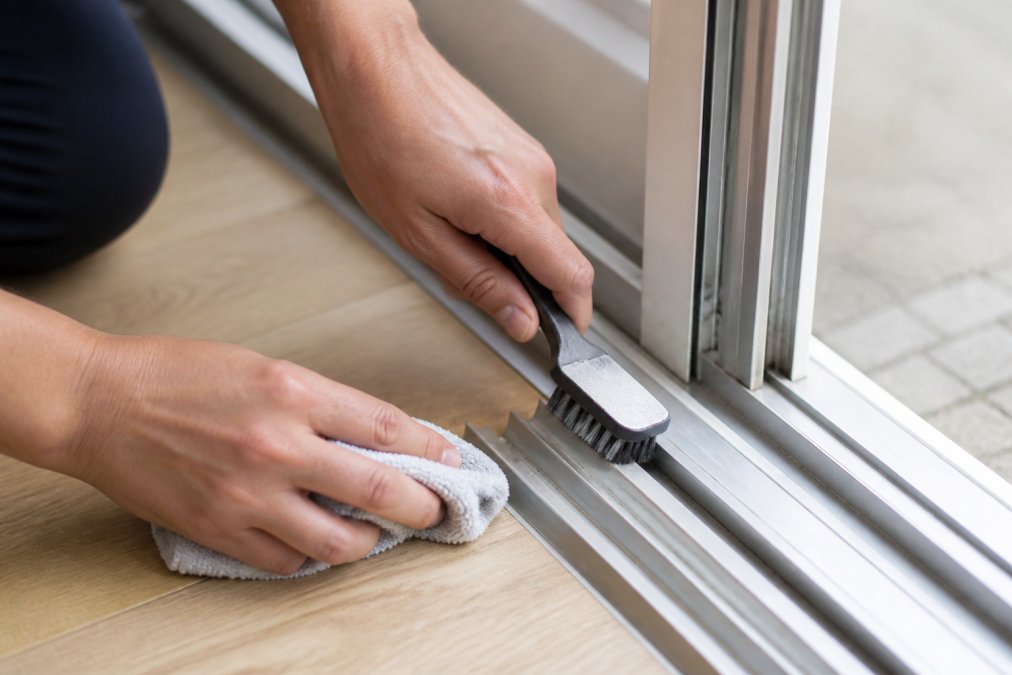
Clean the track regularly, at least monthly, or more frequently in dusty or sandy environments. Use a soft brush or vacuum to remove debris. Dust and sand particles lodge in the track profile and create friction, accelerating wear on roller bearings.
Wipe the track with a damp cloth to remove fine dust that brushing misses. Allow the track to dry completely before operating the door.
Lubricate the track quarterly using a silicone-based lubricant spray. Apply a light coating to the entire track profile, then slide the door back and forth several times to distribute the lubricant. Silicone lubricant reduces friction and protects against corrosion. Avoid oil-based lubricants; they attract dust and create sticky residue that worsens performance.
Check the track alignment annually. If the door drags or requires more force than normal, the track may be misaligned. Slight misalignment can sometimes be corrected by adjusting the door runners or floor guide.
Inspect the roller bearings for visible damage. If a bearing is visibly cracked or the door suddenly becomes noisy, the bearing needs replacement.
In high-humidity environments, increase cleaning frequency to monthly and lubrication to every six weeks. Extra maintenance in these conditions extends the track's lifespan significantly.
Troubleshooting Common Track Failures and When to Replace
Even well-maintained track systems can fail. Recognising the signs of failure and understanding when to replace versus repair saves money and prevents safety issues.
The most common failure is binding, where the door requires increasing force to open or close. Binding usually results from debris in the track, misalignment, or worn roller bearings. Start by cleaning the track thoroughly and checking alignment. If binding persists, the bearings are likely worn and need replacement.
Derailing indicates either severe misalignment or a damaged track profile. If the door has derailed once, the track should be inspected for dents or bending. A bent track cannot be reliably straightened and should be replaced.
Noise during operation suggests friction from debris, misalignment, or worn bearings. Clean the track first; if noise continues, the bearings are likely the culprit and should be replaced before the door derails.
Corrosion on the track surface indicates the protective coating has failed. Surface corrosion can be cleaned and treated with a protective spray. Deep corrosion or pitting means the track has lost structural integrity and should be replaced.
Track deflection, visible sagging or bowing of the top track, means the profile is no longer rigid enough to support the load. This is a structural failure that cannot be repaired.
When to replace rather than repair: if the track is bent, deeply corroded, or deflected, replacement is the only option. If roller bearings are damaged, replacement is cheaper than repair. If the track is simply dirty or slightly misaligned, cleaning and adjustment usually restore performance.
DoorsDirect's ten-year guarantee covers defects in materials and workmanship. If your track system fails prematurely due to manufacturing defect, replacement is covered.
Choosing the Right System: Internal vs External Tracks
Sliding door tracks can be mounted internally (within the door frame) or externally (on the wall or frame exterior). Each approach has durability implications and suits different situations.
Internal tracks are concealed within the door frame, creating a clean, finished appearance and protecting the track from dust and impact. However, internal tracks are harder to access for maintenance and cleaning. If debris accumulates inside the frame, it's difficult to remove without disassembling components. Internal tracks also limit maximum load capacity because the frame must be strong enough to support the track without deflecting.
External tracks are mounted on the wall or frame surface, making them visible but easily accessible for cleaning and maintenance. External tracks can support heavier loads because the mounting structure is more rigid. The downside is appearance; external tracks are visible and require careful design integration to look polished.
For residential wardrobes, internal tracks are standard and preferred. They provide a seamless appearance and protect the track from dust. For heavy-duty commercial applications or awkward spaces like loft conversions with sloped ceilings, external tracks are sometimes necessary.
DoorsDirect's made-to-measure sliding wardrobe doors use internal track systems as standard. For unconventional spaces, custom external mounting can be specified. The DoorsDirect team works with you during measurement to identify the best approach for your specific space, ensuring the track system is optimised for both durability and aesthetics.

| Comparison | Aluminium (Anodised) | Steel | Soft-Close Compatible |
|---|---|---|---|
| Corrosion Resistance | Excellent (self-healing oxide) | Poor (requires coating) | Yes (both materials) |
| Weight | Lightweight | Heavy | Yes (both materials) |
| Maintenance | Minimal (quarterly lubrication) | Regular (recoating needed) | Yes (both materials) |
| Load Capacity | Good (up to 150 kg typical) | Excellent (up to 250+ kg) | Yes (both materials) |
| Cost | Moderate | Lower upfront, higher long-term | Adds 10-15% to system cost |
| Lifespan | 10+ years | 5-7 years without maintenance | 10+ years with soft-close |
Choosing the right sliding door track system means balancing material durability, load capacity, maintenance demands, and your specific space constraints. Aluminium extrusion with anodised finish is the practical choice for most homes, it resists corrosion, requires minimal maintenance, and glides smoothly for years. Soft-close mechanisms extend lifespan by reducing impact stress. Proper maintenance, monthly cleaning and quarterly lubrication, is the most cost-effective way to ensure your track system performs reliably for a decade.
DoorsDirect's custom-made sliding wardrobe doors come with premium aluminium tracks, soft-close action, and a ten-year guarantee. Whether you're installing a two-door system in a standard bedroom or a custom five-door configuration in an awkward loft space, the track system is engineered and specified for your exact dimensions and load requirements. Our three-stage quality check process ensures every component meets durability standards before shipment.
Order your made-to-measure sliding wardrobe doors from DoorsDirect and invest in a storage solution built to last. With options like the Custom 2 Door Sliding Wardrobe Doors starting from £803.00, the Custom 3 Door Sliding Wardrobe Doors from £1,317.00, and premium pre-designed collections like the Durham 2 Door at £528.00 or the Monaco 3 Door from £837.00, there's a durable track system for every space and budget. Get started today with expert guidance from measurement to final fit, backed by nationwide delivery and a decade-long guarantee.
Frequently Asked Questions
What materials make sliding door tracks the most durable?
Aluminium extrusion and stainless steel are choices for durability. Aluminium tracks resist rust and corrosion naturally, making them ideal for daily use in varying humidity. Stainless steel offers superior strength. Premium suppliers like DoorsDirect use aluminium profiles, ensuring longevity backed by guarantees such as their 10-year promise. The track profile design also matters: deeper, reinforced profiles distribute door panel weight more effectively and reduce friction over time.
How often should sliding door tracks be cleaned for daily use?
Clean tracks monthly for typical household use, or every 2-3 weeks in dusty or high-traffic environments. Debris, dust, and pet hair accumulate in the track channel and create friction, forcing rollers to work harder. Use a soft brush or vacuum to remove loose particles, then wipe with a damp cloth. Avoid oil-based lubricants, which attract dust and gum up the mechanism. Dry the track thoroughly after cleaning to prevent moisture-related wear on the sliding mechanism.
What are the signs that a sliding door track needs replacing?
Watch for grinding sounds, resistance when opening or closing, visible rust or corrosion on the track surface, or doors that drift off-centre. Doors that jump or derail indicate worn roller bearings or track misalignment. If the track profile shows visible dents or warping, replacement is necessary because the door panel weight cannot distribute evenly, accelerating failure. A 10-year guarantee on quality tracks covers defects, but normal wear from daily use may require replacement after 8-12 years depending on usage intensity.
Can you upgrade existing sliding door tracks to heavy-duty versions?
Yes, you can upgrade if the door opening dimensions and weight capacity align with the new system. Heavy-duty sliding door track kits include reinforced aluminium extrusion, upgraded roller bearings, and improved floor guides designed for higher load-bearing capacity. However, the existing door panels must fit the new track profile, and floor preparation may be required. Professional installation ensures proper track alignment and optimal friction reduction. DoorsDirect offers custom solutions and expert guidance to assess whether an upgrade suits your space and current door configuration.
Are aluminium or steel tracks better for daily sliding door use?
Aluminium tracks are superior for daily use because they resist rust, require less maintenance, and offer excellent friction reduction through smooth extrusion profiles. Steel tracks are heavier and stronger but corrode faster without protective coatings, demanding more frequent maintenance. Aluminium also provides better thermal stability, preventing expansion and contraction issues in temperature-variable environments. DoorsDirect's premium aluminium range with glazing gaskets and soft brush pile door edging delivers durability suited to high-traffic residential and commercial applications over extended periods.
This article was written using GrandRanker
Leave a comment