


Best Sliding Wardrobe Door Materials: 2026 Guide
Table of Contents
- Sliding Wardrobe Door Materials Compared: Quick Guide
-
What Is the Best Material for Sliding Wardrobe Doors?
- Table of Contents
- Sliding Wardrobe Door Materials Compared: Quick Guide
- What Is the Best Material for Sliding Wardrobe Doors?
- Mirrored vs Glass Wardrobe Doors: Which Suits Your Room?
- How the Door Material Affects Sliding Performance
- Framing, Track Systems and Soft-Close Mechanisms
- Durability, Moisture Resistance and Climate Performance
- How to Clean Sliding Wardrobe Doors by Material
- Budget, Sustainability and Your Final Decision
- Frequently Asked Questions
- Mirrored vs Glass Wardrobe Doors: Which Suits Your Room?
- [How the Door Material Affects Sliding Performance](#how the-door-material-affects-sliding-performance)
- Framing, Track Systems and Soft-Close Mechanisms
- Durability, Moisture Resistance and Climate Performance
- How to Clean Sliding Wardrobe Doors by Material
- Budget, Sustainability and Your Final Decision
Last Updated: September 5, 2026
Sliding Wardrobe Door Materials Compared: Quick Guide
Choosing the best sliding wardrobe door materials comes down to balancing three factors: durability, maintenance, and how the finish works with your bedroom's light and style. The right material transforms a functional storage unit into a design feature, while the wrong one can feel dated within a year or show every fingerprint within a week. This guide from DoorsDirect breaks down glass, wood, MDF, and mirrored options so you can match the material to your room, your budget, and your tolerance for cleaning.
Most homeowners fixate on aesthetics first, but the material determines more than looks. It affects how smoothly the doors glide, how much noise they absorb, how they cope with humid bathrooms or chilly loft conversions, and how often you'll be reaching for a spray bottle. We'll cover the practical differences between each sliding wardrobe door material, then show you how to clean and maintain them.
What Is the Best Material for Sliding Wardrobe Doors?
The best material for sliding wardrobe doors is tempered glass in an aluminium frame for most modern bedrooms, because it combines scratch resistance, easy cleaning, and a lightweight feel that protects the sliding mechanism. For traditional or period homes, wood veneer offers unmatched warmth. For budget-conscious renovations, MFC and particle board deliver reliable performance at a lower cost. Your choice should reflect the room's style and how much maintenance you're willing to take on.
Glass Doors: Tempered, Tinted and Fluted Options
Tempered glass is the standout performer for durability and safety. It's several times stronger than standard glass, and if it does break, it shatters into small, blunt pieces rather than dangerous shards, making it a safe choice even in family homes.
Tinted glass adds privacy while maintaining a sleek, contemporary look. Fluted or ribbed glass diffuses light beautifully and obscures the contents of your wardrobe, which is ideal if you prefer a minimalist aesthetic without visible clutter. The main drawback is cost, which runs higher than MDF or particle board options.
Glass panels are heavy, so the frame quality matters enormously. Aluminium profiles and tracks handle the weight without flexing, whereas cheaper steel alternatives can bend or wear over time. At DoorsDirect, our Durham 2 Door collection features full-panel glass doors with aluminium profiles and tracks, designed to handle the load smoothly from £528.00.

Wood and Wood Veneer: Classic Warmth
Solid wood and wood veneer bring a warmth that glass and mirror simply cannot replicate. Woodgrain finishes suit traditional bedrooms, period properties, and spaces where you want the wardrobe to feel like furniture rather than a built-in fixture.
Solid wood is the premium option, offering exceptional structural integrity and a lifespan measured in decades. It's also heavy, expensive, and requires periodic treatment to prevent drying or warping. Wood veneer offers the same visual warmth over a lighter core, making it more practical for sliding doors where weight affects track performance.
The practical compromise is a woodgrain melamine finish, which captures the look of timber with far less maintenance. It won't fade, doesn't require oiling, and cleans with a damp cloth. For a classic aesthetic without the upkeep of real wood, this is the sliding wardrobe door material most designers recommend.
MDF, MFC and Particle Board: The Practical Choice
MDF (medium-density fibreboard), MFC (melamine-faced chipboard), and particle board are the workhorses of the wardrobe industry. They're affordable, stable, and available in a vast range of finishes, from high gloss to matte to realistic woodgrain textures.
MDF takes paint exceptionally well, which makes it ideal for bespoke colour matching. MFC is particle board with a melamine laminate, offering good moisture resistance and scratch resistance at a budget price. High-gloss MFC finishes brighten a room by reflecting light, though they show fingerprints more readily than matte options.
The tradeoff is durability. These materials are susceptible to impact damage and moisture swelling at exposed edges, so quality edging is essential. The York 2 Door range from DoorsDirect uses melamine panels with glazing gaskets and soft brush pile edging to protect those vulnerable edges, priced from £568.00.

Mirrored Finishes: Space and Light
Mirrored wardrobe doors are the classic solution for small bedrooms. A full-length mirror reflects light and visually doubles the space, making a compact room feel significantly larger. They also serve a practical purpose, letting you check your outfit without a separate mirror.
Modern mirrored finishes go beyond the standard clear reflection. Grey and bronze tinted mirrors add a contemporary edge while softening the reflection. The main maintenance consideration is fingerprints and smudges, which show clearly on mirror surfaces, though modern coatings improve fingerprint resistance.
Mirrored doors work brilliantly in rooms where space optimisation is the priority. In a narrow bedroom or a loft conversion with sloping ceilings, the reflective surface prevents the wardrobe from feeling like a bulky intrusion. This is why mirrored finishes remain one of the most popular sliding wardrobe door materials for UK homes.
Mirrored vs Glass Wardrobe Doors: Which Suits Your Room?
Mirrored doors win in small or dark rooms where light reflection and space perception matter most. Glass doors win in larger, brighter spaces where you want a clean, contemporary look and don't need the reflection. If you're torn, many configurations combine both, with one mirrored door and one glass door per wardrobe.
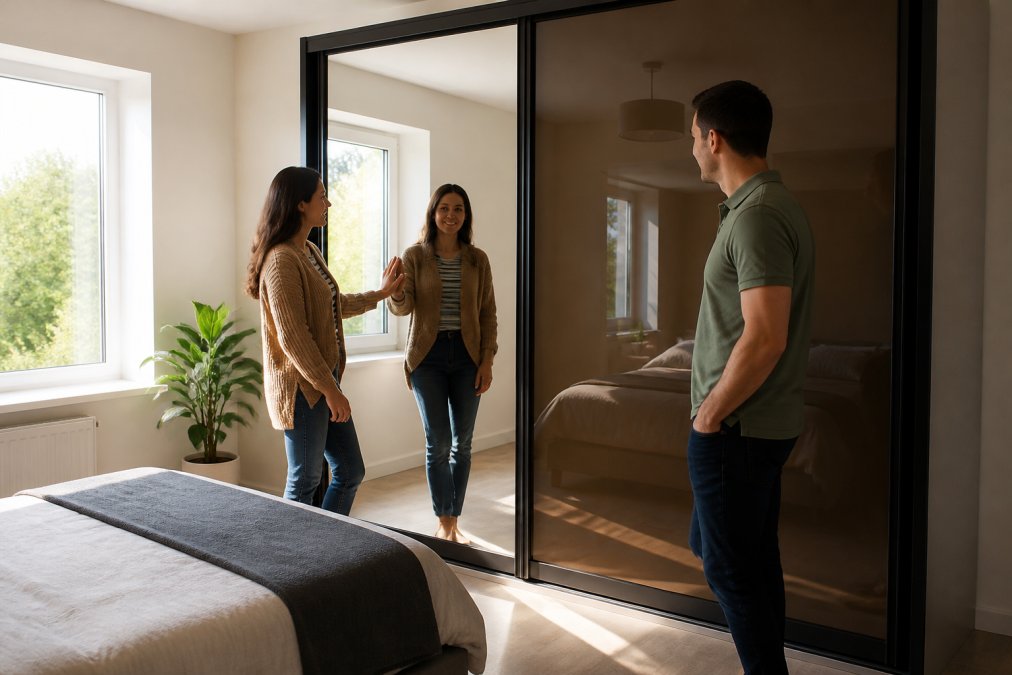
Consider your room's orientation. A north-facing bedroom with limited natural light will benefit enormously from a mirrored finish that bounces light around the space. A south-facing room with abundant light can handle the stronger visual statement of tinted or fluted glass without feeling dark.
| Door Type | Best Room | Key Benefit | Maintenance |
|---|---|---|---|
| Clear Mirror | Small, dark rooms | Doubles visual space | Frequent cleaning |
| Tinted Mirror | Medium bedrooms | Softens reflection | Moderate cleaning |
| Clear Glass | Large, bright rooms | Sleek minimalism | Frequent cleaning |
| Tinted Glass | Modern, bright rooms | Privacy + style | Moderate cleaning |
| Fluted Glass | Contemporary spaces | Diffuses light, hides clutter | Occasional cleaning |
How the Door Material Affects Sliding Performance
The material determines the weight of each door, and weight directly affects how smoothly the doors slide and how long the track system lasts. A lightweight MDF panel places far less stress on the sliding gear than a heavy solid wood or full-glass door. This is where cheaper installations fail.
Aluminium profiles and tracks are the critical upgrade over steel. Aluminium doesn't rust, resists bending, and provides a smoother running surface for the wheels. Steel tracks, common in budget installations, can corrode over time, especially in bedrooms with en-suite bathrooms where humidity is higher.
A soft-close mechanism is worth the investment regardless of material. It prevents the doors from slamming, reduces wear on the track and wheels, and protects the door edges from impact damage. For heavier materials like glass or solid wood, soft-close is almost essential to extend the life of the installation.
Framing, Track Systems and Soft-Close Mechanisms
The frame and track system are the skeleton of your sliding wardrobe, and they deserve as much attention as the door panels themselves. A beautiful glass panel in a flimsy frame will disappoint within months. A quality aluminium frame with properly engineered tracks will run smoothly for years.
Look for these features when evaluating a system:
- Aluminium profiles and tracks, not steel
- Glazing gaskets that hold panels securely without rattling
- Soft brush pile edging that seals gaps and cushions movement
- Soft-close mechanisms on both doors
- Tracks supplied slightly longer than the opening, so you can trim for a precise fit on site
DoorsDirect's Monaco 2 Door collection exemplifies this approach, offering a choice of 8 profile colours, soft-close action, and the Premium Aluminium Range construction with glazing gaskets and brush pile edging, from £558.00. The track system is engineered for daily use over many years, backed by a 10-year guarantee.

Durability, Moisture Resistance and Climate Performance
Different materials respond differently to the conditions in your home. A wardrobe in a dry, heated bedroom faces different challenges than one in a loft conversion that fluctuates in temperature or a room adjoining a bathroom where humidity creeps in.
MDF and particle board are the most vulnerable to moisture. If the edges aren't properly sealed, they can swell and distort when exposed to damp. This is why quality edging, such as the 2mm PVC edging on DoorsDirect's Strike Plate Premium, matters enormously for longevity.
Glass and aluminium are completely impervious to moisture, making them the best choice for humid environments. Solid wood requires the most care, needing stable humidity levels to prevent warping. Wood veneer over an engineered core offers a middle ground, providing the look of timber with better dimensional stability.
For UK homes, where heating cycles and occasional damp are common, the practical recommendation is to choose materials that tolerate humidity fluctuations. Tempered glass, aluminium-framed panels, and quality MFC with sealed edges all perform reliably across changing seasons.
How to Clean Sliding Wardrobe Doors by Material
Cleaning requirements vary significantly by material, and choosing a finish you're comfortable maintaining is a practical decision, not just an aesthetic one. Here's what each material demands in terms of upkeep.
Glass and Mirrored Doors Use a microfibre cloth and a dedicated glass cleaner or a vinegar-and-water solution. Avoid abrasive pads, which can scratch the surface. For mirrored doors, clean in vertical strokes on one side and horizontal strokes on the other, so you can spot any streaks you've missed. Tinted glass requires the same approach but check the manufacturer's guidance, as some coatings are sensitive to ammonia-based cleaners.
MDF, MFC and Laminate Doors A damp microfibre cloth is usually sufficient for daily cleaning. For stubborn marks, a mild detergent solution works well. Avoid soaking the edges, as this is where moisture damage begins. High-gloss finishes benefit from a specialist polish to maintain their reflective quality and reduce static that attracts dust.
Wood and Wood Veneer Doors Dust regularly with a dry cloth. For deeper cleaning, use a product specifically formulated for wood surfaces. Avoid water-based cleaners, which can dull the finish or cause veneer to lift. Periodically apply a suitable furniture polish or wax to maintain the wood's natural lustre.
Aluminium Frames and Tracks Wipe frames with a damp cloth to remove dust and fingerprints. The bottom track is the critical area: vacuum it regularly to remove dust and debris that can impede the wheels. A soft brush attachment works well for this. Lubricate the wheels and track sparingly with a silicone-based spray if you notice any stiffness.
Budget, Sustainability and Your Final Decision
Budget is often the deciding factor when choosing sliding wardrobe door materials. As a general guide, MFC and particle board offer the most economical entry point, followed by MDF, then mirrored and glass options, with solid wood commanding the highest price. The frame quality adds significantly to cost, but it's the component most directly tied to longevity.
Beyond the upfront price, consider the environmental impact. MDF and particle board are typically manufactured from recycled wood fibres, making them a more sustainable choice than solid timber from virgin sources. Many manufacturers now use low-VOC adhesives and finishes, which is worth checking if indoor air quality is a concern in your home. guidance on indoor air quality
For a sustainable choice that doesn't compromise on durability, look for materials with third-party certification for responsible sourcing. Wood veneer over an engineered core offers the aesthetic of timber with better resource efficiency than solid wood.
Your final decision should weigh these factors in order of your priorities:
- Room size and natural light (mirrored for small, glass for large)
- Maintenance tolerance (MFC for low upkeep, wood for those who enjoy caring for it)
- Budget (MFC entry-level, glass and mirror mid-range, solid wood premium)
- Environmental values (certified wood, low-VOC finishes)
Choosing the best sliding wardrobe door materials is about matching the material to your room's practical needs, not just following trends. At DoorsDirect, we offer made-to-measure sliding doors across glass, mirror, melamine, and woodgrain finishes, all built with aluminium profiles and tracks, soft-close options, and a 10-year guarantee for peace of mind. Our team guides you from measurement to final fit, whether you're a homeowner tackling a loft conversion or a joiner working on a client project. Order yours today and build a wardrobe that performs as well as it looks.
Frequently Asked Questions
What is the most durable material for sliding wardrobe doors?
Tempered glass and aluminium-framed doors offer the best structural integrity and scratch resistance for daily use. Tempered glass is several times stronger than standard glass and resists impact. For a non-glass option, plywood with a wood veneer finish provides excellent durability without the weight of solid wood. MDF is durable for internal use, but it is vulnerable to moisture damage in humid rooms. Always pair the door panel with a quality aluminium track system, as the running gear often determines how long the doors last.
Are mirrored sliding wardrobe doors better than glass?
Mirrored doors and glass doors serve different purposes. Mirrored finishes make a small bedroom feel larger and brighten the space by reflecting light, which is useful in rooms without much natural light. Glass doors, particularly tinted or fluted options, offer a more contemporary aesthetic and hide fingerprints better than mirrors. Both use tempered glass for safety. If you need a full-length dressing mirror, choose mirrored doors. If you want a modern look with privacy for the contents, opt for tinted glass with an aluminium frame.
How do I choose the right finish for a small bedroom?
In a small bedroom, prioritise light-reflecting surfaces. A mirrored finish is the strongest choice because it visually doubles the space and maximises brightness. High-gloss white or light grey melamine panels also work well, as they bounce light around the room. Avoid dark wood veneers and matte finishes in compact spaces, as they absorb light and make the room feel smaller. A slimline aluminium frame in white or silver keeps the visual weight low. Consider a full-panel design rather than split panels for a cleaner, less cluttered look.
What material offers the best value for money for wardrobe doors?
Melamine-faced chipboard (MFC) offers the best value for money. It is affordable, scratch-resistant and available in realistic woodgrain and high-gloss finishes. For a typical 2-door set, an MFC option such as the Ripon collection from DoorsDirect starts at £478.00. If your budget allows, upgrading to a full-panel design with aluminium profiles and soft-close action adds durability without a major price jump. Avoid the cheapest particle board options, as they lack moisture resistance and structural integrity over time.
Are high-gloss sliding doors easy to maintain?
High-gloss finishes are easy to clean but show fingerprints and smudges more readily than matte or textured surfaces. A microfibre cloth with warm water and a drop of mild detergent is all you need for routine cleaning. Avoid abrasive sponges and solvent-based cleaners, which can dull the surface. High-gloss melamine panels resist moisture well, making them suitable for bedrooms. If you want a low-maintenance option that hides marks, choose a matte finish or a woodgrain texture instead.
This article was written using GrandRanker
Leave a comment