


BedroomsPlus vs i-Slide: A 2026 Comparison Guide
Table of Contents
- BedroomsPlus vs i-Slide at a Glance
- What BedroomsPlus vs i-Slide Really Means for Fitted Furniture
- Made to Measure Sliding Wardrobe Doors UK Buyers Should Expect
- Sliding Wardrobe Door Installation Guide: What Each Route Involves
- Best Sliding Wardrobe Suppliers for Joiners and Trade Buyers
- Track Mechanisms, Weight Capacity and Long-Term Performance
- Conclusion
- Frequently Asked Questions
Last Updated: September 26, 2026
BedroomsPlus vs i-Slide at a Glance
Search for a bedroomsplus vs i-slide comparison guide and you will find almost nothing useful. That is the problem this article solves. Both names sit in the same corner of the fitted furniture market, both sell made to measure sliding wardrobe doors, and neither makes the choice obvious. At DoorsDirect, we supply sliding systems every day, so we know exactly which technical details separate a wardrobe that lasts from one that rattles loose within two years. Selecting the right sliding mechanism is only the first step toward maximizing your room layout, especially when you are balancing the functional requirements of bedroom furniture for small spaces.
Here is the short answer before the detail: the two brands differ less in concept than in execution.
| Feature | Typical Budget System | DoorsDirect Premium Range |
|---|---|---|
| Profile and track material | Steel (common at low price points) | Aluminium |
| Panel construction | Single panel, sometimes thinner | 3 individual panels per door |
| Soft close | Often an extra or absent | Available as an extra |
| Profile colour choice | Usually 1 or 2 | Up to 8 |
| Height capacity | Lower | Up to 2540mm |
| Guarantee | Varies | 10-year guarantee |
How the Two Systems Differ in One Table
The table above is the fastest way to see where value sits. Notice that the biggest gaps are not in styling. They are in the parts you cannot see once the doors are hung: the aluminium profile, the individual panel build, and the runner hardware.
What BedroomsPlus vs i-Slide Really Means for Fitted Furniture
Strip away the branding and the decision comes down to three things: how the doors are made, how they run, and how the supplier handles a problem. A fitted wardrobe is not a piece of flat-pack furniture you can return to a shop. It is cut to your dimensions, so the sizing conversation happens before anything is manufactured.
| Technical spec | What to check | Why it matters |
|---|---|---|
| Track system | Top-hung aluminium vs bottom-rolling steel | Top-hung aluminium spreads load along the full track; bottom-rolling steel systems can bind sooner on uneven floors |
| Runner type | Twin-wheel nylon or ball-bearing carriers | Ball-bearing carriers handle heavier panels with less friction over years of daily use |
| Weight capacity per door | Ask for the rated figure in kilograms, not a vague 'heavy duty' claim | A door rated below its actual panel weight may sag and jump within a couple of years |
| Panel count per door | Confirm in writing, one, two or three individual panels | Fewer panels than the design implies can be a corner cut |
| Track trim allowance | Supplied longer than the opening so it can be cut on site | Lets the fitter square up to a wall that is not plumb |
| Profile material | Aluminium vs steel | Aluminium holds its shape; steel profiles can be cheaper to produce but may distort under load |
| Guarantee length and scope | Years plus what is actually covered (hardware, runners, panels) | The clearest signal of how long the supplier expects the system to last |
UK government guidance on consumer rights for custom-made goods
Made to Measure Sliding Wardrobe Doors UK Buyers Should Expect
Made to measure sliding wardrobe doors are built to your exact opening dimensions rather than a fixed stock size. That means the supplier needs your height and width, and the door set is manufactured to suit.
- Full panel design: one piece of glass, mirror, or melamine per sliding door
- Split panel design: multiple pieces per door, which is where some suppliers cut corners
- Profile colour: white as standard, up to 8 options on premium ranges
- Soft close: check whether it is included or an extra
Sliding Wardrobe Door Installation Guide: What Each Route Involves
A sliding wardrobe door installation guide comes down to two steps that decide everything: setting the top track level, and trimming the bottom track to the opening. Get the top track out of level and the doors will drift open on their own. Get the bottom track wrong and the runners will bind.
Here is the sequence a competent fitter follows:
- Measure the opening at three points and use the narrowest figure
- Fix the top track level, packing it out where the wall runs out
- Trim the bottom track to the opening width
- Hang the first door on the rear track and check the glide
- Hang the second door on the front track and align the overlap
- Adjust the runners until both doors sit flush at the closing edge
- Fit the brush pile edging to close the gap against draughts and dust
DIY vs Professional: An Honest Difficulty Rating
| Task | DIY difficulty | Why |
|---|---|---|
| Measuring the opening | Moderate | Three-point measurement is easy to get wrong; a single measurement at the widest point is the classic error |
| Fixing the top track level | Hard | Needs a long spirit level and packers; a wall out of plumb by a few millimetres will show up as drifting doors |
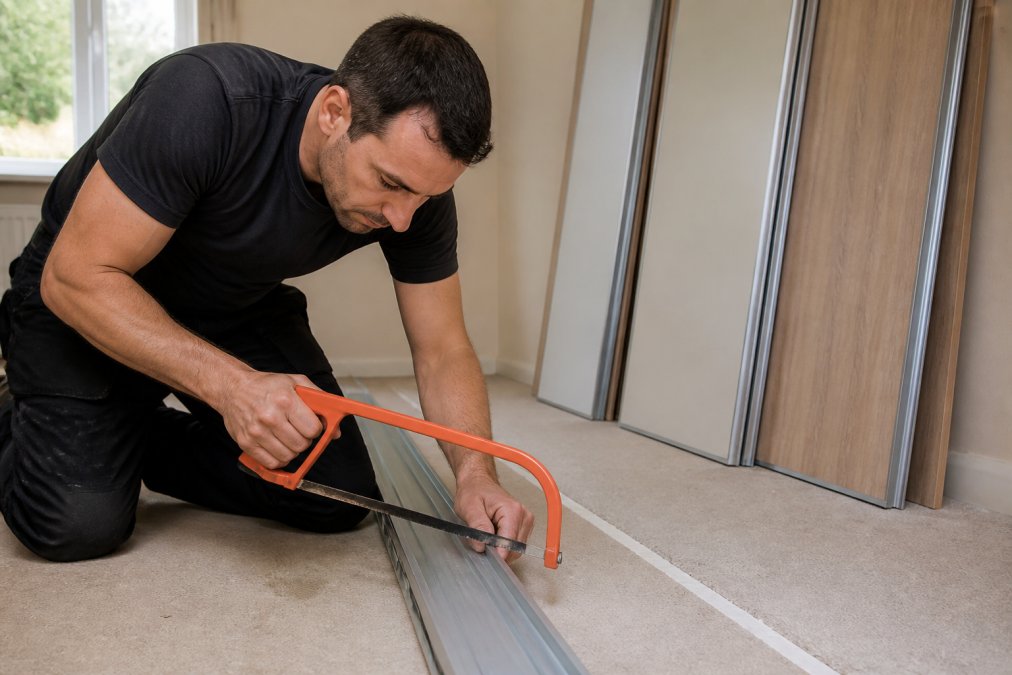
| Trimming the bottom track | Moderate | Straightforward with a hacksaw and file, but the cut must be square |
| Lifting and hanging panels | Hard on your own | Full-height mirrored or glass panels are heavy and awkward; two people minimum |
| Aligning the overlap | Moderate | Fiddly rather than difficult; expect to adjust runners more than once |
| Fitting brush pile edging | Easy | Push-fit on most systems |
Best Sliding Wardrobe Suppliers for Joiners and Trade Buyers
Trade buyers judge a supplier on three things: whether the doors arrive the right size, whether the hardware survives repeat orders, and whether someone answers the phone when a job goes sideways. Price matters, but a cheap door that arrives wrong costs a joiner a return visit and a damaged reputation.
- Are the profiles and tracks aluminium rather than steel?
- Is the track supplied long enough to trim on site?
- How many individual panels sit in each door?
- What is the guarantee, and what does it actually cover?
- Is there trade pricing and dedicated support, or just a consumer checkout?
- Can you get help with measuring before the order is cut?
Track Mechanisms, Weight Capacity and Long-Term Performance
Track mechanisms decide how a wardrobe feels after five years, not five days. A well-built runner spreads the door's weight across the full length of the track, which can help prevent sagging and jumping.
Conclusion
Choosing between these two routes is really a question of how much risk you want to carry on a made to measure order. The brands look similar on a product page, but the track material, panel count, and guarantee tell you which supplier expects the doors to last.
Frequently Asked Questions
What are the drawbacks of sliding wardrobe doors?
Sliding doors only reveal half the wardrobe at once, so you cannot see the full interior in one go. Cheaper systems with steel tracks can jump or wear, and panels are heavy, so floor alignment matters. Interior depth also matters: 400mm is tight for hanging rails, and most fitted furniture works better at 550mm to 600mm. A made to measure system with aluminium tracks and a ten-year guarantee removes most of the common failure points.
What are the common problems with sliding wardrobe doors?
The usual complaints are doors coming off the track, sticking runners, rattling panels and worn rollers after a year or two. Most of these trace back to steel tracks, thin frames and poor weight capacity rather than the sliding design itself. Aluminium profiles, glazing gaskets, soft brush pile edging and soft close action all reduce wear. Checking the track material and guarantee length before you buy tells you more than the showroom finish.
How do I choose the best sliding wardrobe door supplier?
Look at four things: whether doors are genuinely made to measure, what the tracks and profiles are made from, how long the guarantee runs, and whether the supplier supports trade and DIY buyers. Aluminium tracks outlast steel, glazing gaskets and soft brush pile edging cut rattle and dust, and a ten-year guarantee signals confidence in the hardware. Ask about the measurement process too, because a perfect fit starts before the doors are cut.
Is 400mm deep enough for a wardrobe?
400mm suits shallow storage such as folded clothes, shoes or linen, but it is tight for full-length hanging. Standard hangers need roughly 550mm to 600mm of internal depth to sit straight and let the doors run clear. If you are working with a shallow alcove, a made to measure interior with a mix of shelves and a short hanging section uses the space better than forcing a full rail into 400mm.
What materials are best for bespoke sliding wardrobe doors?
Aluminium profiles and tracks outperform steel because they resist flex and corrosion, which keeps panels gliding smoothly over time. Glass, mirror and melamine panels each suit different rooms: mirror brightens darker bedrooms, glass adds a sleek look, and melamine is practical and cost-effective. Glazing gaskets and soft brush pile edging protect the panel edges and keep dust out of the track, which extends the life of the whole system.
Leave a comment